26 August 2026
26
August 2026

Schulman Lobel Turns Regulatory Change into Opportunity


Navigating change and identifying opportunity are essential skills in today's business environment. In these latest insights, Schulman Lobel explores two significant developments in U.S. tax and regulatory compliance: practical strategies for implementing equity-based compensation within S Corporations while preserving valuable tax status, and the IRS's new automatic penalty relief programme designed to simplify processes for compliant taxpayers. Together, these articles demonstrate how informed planning and proactive advice can help businesses reduce risk, improve efficiency, and make confident decisions in an evolving regulatory landscape.

Industry and Policy Update:

IRS Introduces Automatic Tax Penalty Relief for Eligible Taxpayers:

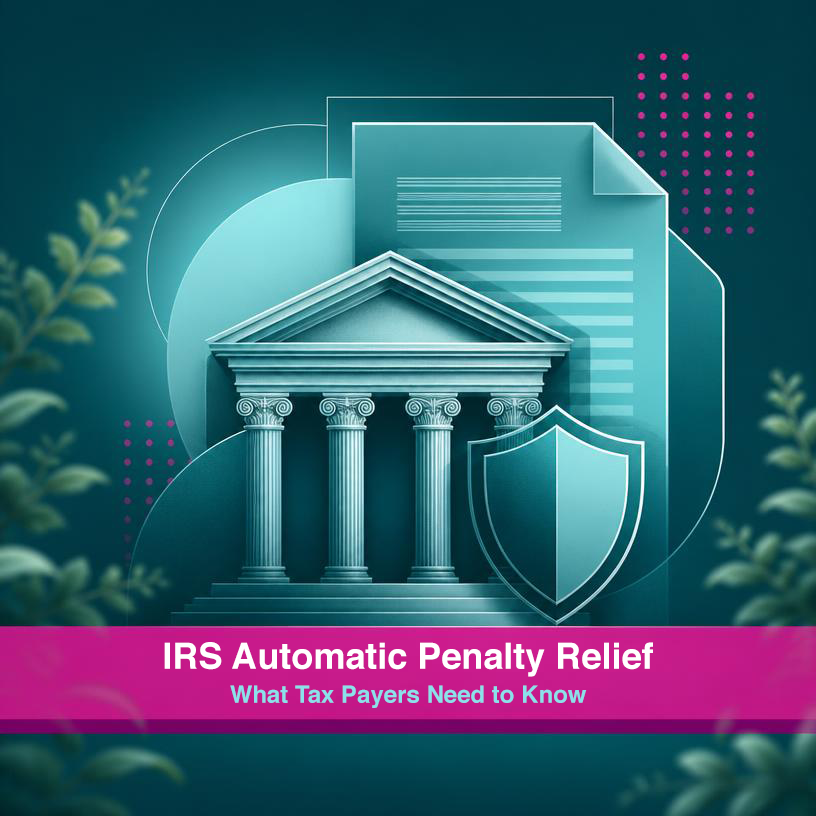
Schulman Lobel highlights a significant change in IRS penalty administration that could reduce the burden on compliant taxpayers. Under a new Automatic Exemption from Penalty (AEP) initiative, taxpayers with a strong compliance history will no longer need to submit a formal request for relief from certain failure-to-file, failure-to-pay, and failure-to-deposit penalties. Instead, the IRS will automatically identify eligible taxpayers, remove qualifying penalties, and notify them of the relief granted.

The change reflects the IRS's recognition that taxpayers who consistently meet their filing and payment obligations should not have to navigate an administrative process to obtain relief that is routinely approved.

The new rules will apply to original returns beginning with the 2025 tax year, as well as 2026 quarterly returns and future filing periods. The IRS began transitioning from the existing First-Time Abate (FTA) waiver process during 2026, with AEP set to fully replace FTA waivers for eligible returns due on or after 1 January 2027.

For businesses and individuals alike, the development represents a notable shift in tax administration, streamlining access to penalty relief while rewarding a history of compliance. Schulman Lobel advises taxpayers who receive penalty notices or have questions regarding eligibility to seek professional guidance to ensure they benefit from any relief available under the new framework.

Learn More About: IRS Automatic Penalty Relief

Research, Data & Thought Leadership:

Avoiding Tax Pitfalls in S Corporation Equity Compensation:

In a recent analysis, Schulman Lobel examines the challenges S corporations face when implementing equity compensation plans while maintaining compliance with U.S. tax regulations. The article highlights the "one-class-of-stock" rule, which requires all outstanding shares to have identical distribution and liquidation rights. Breaching this requirement can automatically terminate an S corporation's tax election, resulting in significant tax consequences.

The article outlines how properly structured equity compensation arrangements, including restricted stock, employee stock options, phantom stock, stock appreciation rights (SARs), and qualifying deferred compensation plans, can generally be implemented without creating a prohibited second class of stock. It also reviews several IRS regulatory safe harbours designed to provide flexibility for businesses seeking to attract and retain talent through equity-based incentives.

A key takeaway is that the greatest compliance risk often comes not from compensation plans themselves, but from LLC operating agreements that retain partnership-style allocation provisions after electing S corporation status. The article notes that IRS Revenue Procedure 2022-19 offers a pathway for many businesses to correct these defects without obtaining a private letter ruling.

Learn More About: S Corp Equity Compensation

want to read more?

Related Posts

1 2 3 93
BECOME A MEMBER
Join IAPA
To apply to be a member of IAPA please complete the application form by clicking the button below:
Apply to be a member
searchclosearrow-downcalendarchevron-downtwitterfacebookbarsellipsis-vyoutube-playinstagramcrossmenu